Orange Concrete Contractor Pros
Menu
The Science of Concrete: Understanding Strength and Durability in Orange County Projects
Concrete Mix Orange
At Orange Concrete Contractor Pros, we believe that informed clients make the best partners. Today, we’re diving into the science behind concrete strength and durability – factors that are crucial for successful projects in Orange County’s unique environment.
Concrete Strength and Durability – the Science Behind It All
It’s no secret that at Orange Concrete Contractor Pros, we know that the foundation of a successful construction project lies in the strength and durability of the materials being used. When it comes to building foundations, walls, floors, and other structures that will carry heavy weight or experience high pressure, the one material that stands out above the rest is concrete. But what makes concrete so strong?
Composition of Concrete: The Key to Its Strength
The combination of four primary components creates the strength of concrete:
- Cement: This is the binder of all binders. It provides the glue that holds everything together.
- Aggregates (Sand, Gravel): These provide structure and density to the mixture.
- Water: Activates the cement.
- Admixtures: These special ingredients enhance various properties in the mixture (workability, finish, etc.).
Achieving the Right Balance: A Key to Success
When you combine these four basic components in the right proportions, the resulting product is a very strong and durable material. However, if the proportions are off, the result may be a much weaker product.
Compressive Strength: Measuring Concrete’s Ability to Resist Crushing Forces
Compressive strength measures how well concrete resists crushing forces when it is subjected to those forces in a downward direction.
- Compressive strength is measured in pounds per square inch (PSI).
- For most residential projects, the average compressive strength of the concrete is between 2500 and 4000 PSI.
- High-strength concrete has a compressive strength of 5000 PSI or greater.
Did you know that some concrete used in skyscraper construction has a compressive strength of over 10,000 PSI?
Water-Cement Ratio: Important to Achieve Maximum Strength
The water-cement ratio also greatly affects the strength of the concrete. The lower the ratio of water to cement, the stronger the concrete will be. The higher the ratio, the more workable the mix will be; however, it could also be weaker.
Our team of experienced professionals works closely with architects and engineers to calculate the correct water-cement ratio for each project based on its unique requirements.
Curing: The Unseen Factor That Determines the Final Strength of Concrete
There is an unseen factor that determines how much strength the final product will achieve. Curing refers to the process of providing the ideal amount of moisture and temperature to allow the concrete to develop its maximum strength.
- Typically takes 28 days to reach full strength.
- In Orange County’s warm and dry climate, proper curing is especially important.
At Orange Concrete Contractor Pros, we have developed several specialized curing methods to help ensure the best possible strength from our concrete products, regardless of the conditions of the environment where they will be used.
Aggregates: They Are Not Just Fillers
More than just fillers, the quality and types of aggregate used directly impact the properties of the concrete.
- Shape: Influences the workability of the mix.
- Size: Impacts both the strength and appearance of the finished product.
- Local Orange County aggregates are specifically chosen by us to optimize their performance.
Air Entrainment: Small Bubbles Make a Big Difference
If you live in an area that experiences freeze-thaw cycles (Orange County does not), air entrainment becomes extremely important because tiny air bubbles are provided within the matrix for water to expand into during freezing temperatures.
- Improves durability in cold-weather climates.
- Can improve the workability of mixes in warmer environments.
Reinforcement: Adding Strength to Tension
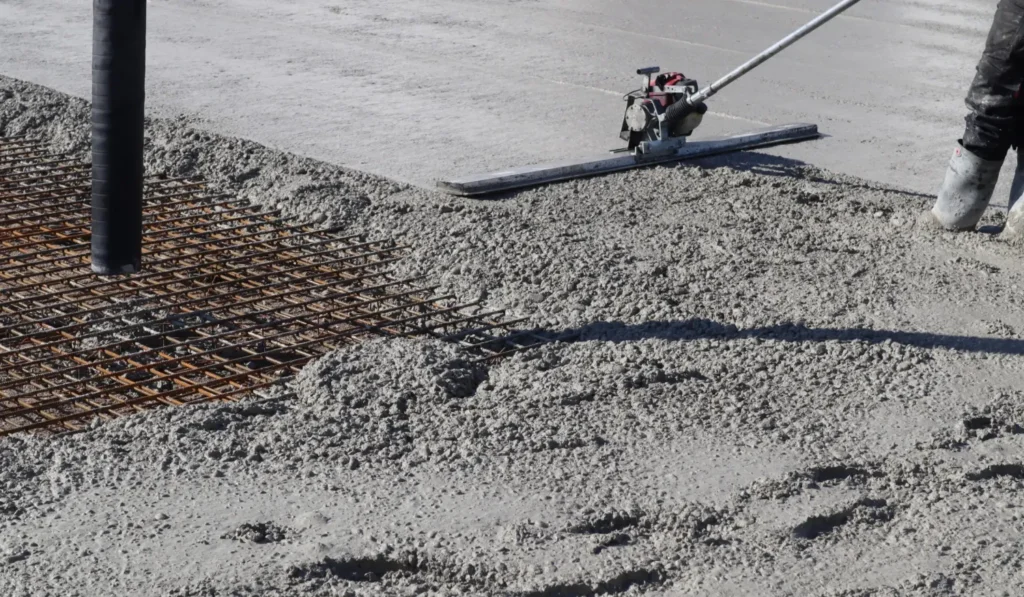
Although concrete is excellent at resisting compressive forces, it is relatively weak under tensile forces. To offset this weakness, we use reinforcing materials.
- Steel rebar for larger structural elements.
- Fiber reinforcement for improved crack-resistance.
- Mesh for large, flat surfaces such as driveways.
Chemical Resistance: Protecting Against Environmental Factors
When working in Orange County, we need to take into consideration the effects of environmental factors such as salt exposure near coastal areas, chemical resistance needed for pool decks, UV-protection for outdoor surfaces, etc.
- We select the best mixes and sealers to counteract these issues.
Future Developments in Concrete Strength
Innovations and developments are emerging in the field of concrete strength, including:
- Self-healing concrete, which can automatically repair cracks.
- Ultra-high-performance concrete, which offers the highest level of durability.
- Geopolymer concrete, which is a low-carbon alternative.
Understanding these aspects of concrete science allows us to produce better results for each of our clients’ unique Orange County projects. At Orange Concrete Contractor Pros, we do not simply pour concrete; we engineer solutions that last.
Do you have questions about the strength and durability of concrete as it relates to your own project? Contact Orange Concrete Contractor Pros today, and let’s talk about how we can utilize the science of concrete to build the best solution for your needs.
As always, remember in the world of concrete, “knowledge is strength” – literally. Trust the pros who understand the science behind every single pour.
LATEST POSTS