Orange Concrete Contractor Pros
Menu
Concrete vs. Pavers in Orange County: Making the Right Choice for Your Outdoor Space
Concrete vs. Pavers
At Orange Concrete Contractor Pros, we often field questions about the pros and cons of concrete versus pavers for outdoor spaces. Both options have their merits, and the best choice depends on your specific needs and preferences. Let’s break down the key factors to consider when deciding between concrete and pavers for your Orange County property.
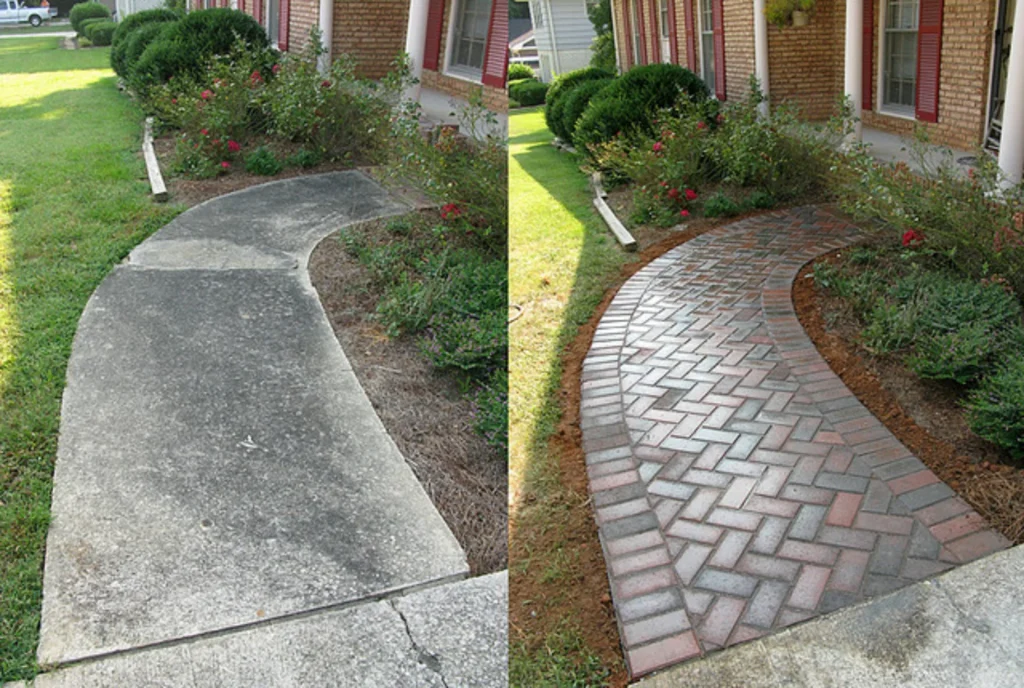
Price and Return on Investment
Pavers are generally more expensive than concrete up front. For example, premium pavers like bluestone, fieldstone, travertine, or clay pavers can range in price from $1 to $2 per square foot for the material alone, depending on the type of paver and the location where it was quarried. In addition, installing pavers can be a very labor-intensive job because each stone must be individually cut and placed in the correct position. This means that the total cost for a paver-installation can be much greater than the cost of the pavers themselves. As an example, a 500 sq. ft. paver driveway installed by a reputable contractor would cost anywhere from $5,000 to $15,000 or more for the material alone. By contrast, concrete is often less expensive than pavers, but the cost does depend on how the finished product looks.
The cheapest way to get a good-looking concrete driveway is to go with a plain gray finish. However, the most expensive option for a concrete driveway is to have it colored, stamped, and sealed. With these types of upgrades, a concrete driveway could end up costing almost as much as a paver driveway. Even though a paver driveway may be more expensive to install, it has the advantage of being easier to repair and maintained easier than a concrete driveway. Individual stones can be removed and replaced if they become cracked or broken, which makes this a great option for people who do not want to have to replace their entire driveway just because one part of it becomes damaged.
Remember: Although concrete may be cheaper to install, you should also think about how much you will need to spend to keep it looking its best.
Durability and Maintenance
Concrete
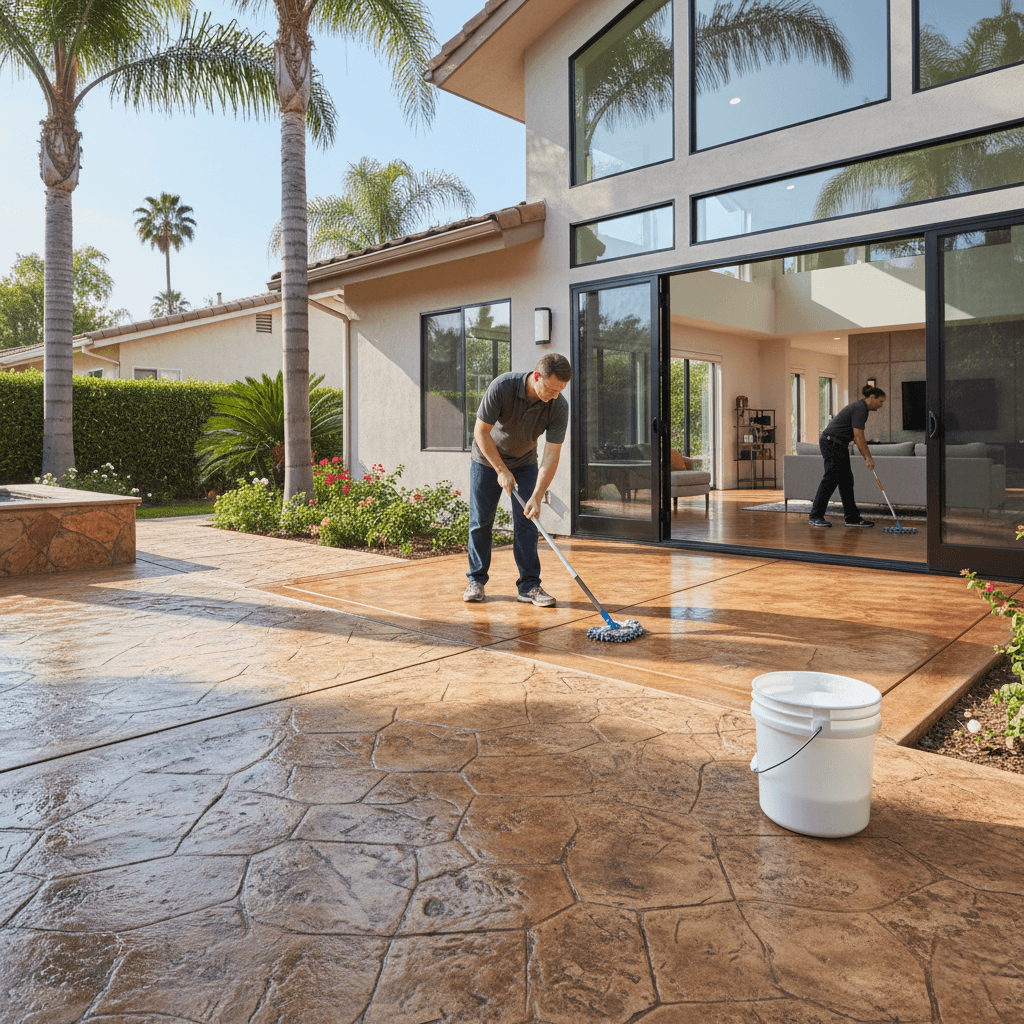
Concrete forms a solid mass of material. Because of this, it is generally more difficult to repair than pavers. To maintain a driveway made of concrete, it must be sealed periodically to protect it from the elements. It can take a few years for a concrete driveway to crack. Cracks are usually caused by soil-movement.
Pavers
Because pavers are individual pieces of material, they are generally able to move slightly without developing cracks. While they still have joints that can shift, pavers are generally easier to repair than concrete. They do require occasional maintenance to ensure the joints stay filled. A paver driveway can be easily repaired by removing the damaged section and replacing it with new pavers.
Tip: While neither concrete nor pavers are ideal for areas subject to extreme temperature-fluctuations, areas near the coast tend to experience cooler temperatures and less soil-movement than inland areas, making them ideal locations for pavers.
Appearance and Customization
Concrete
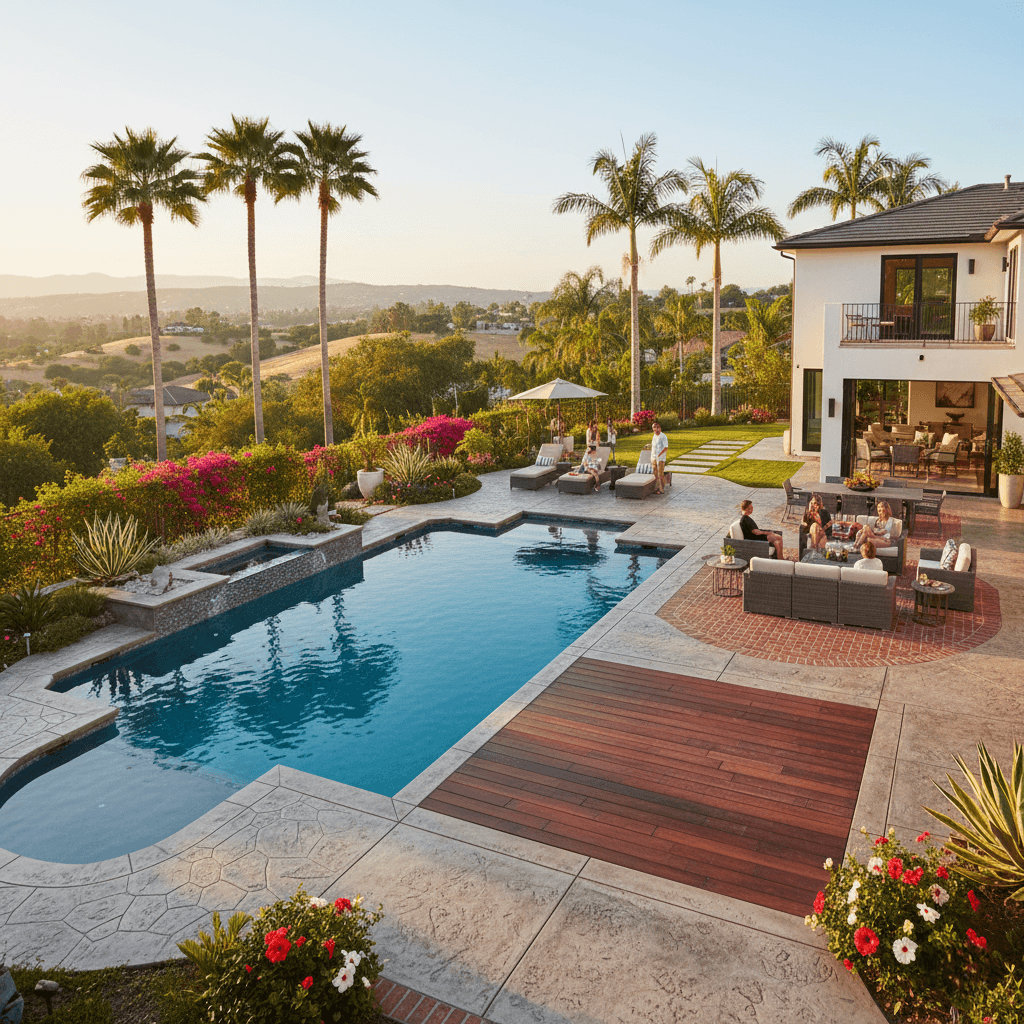
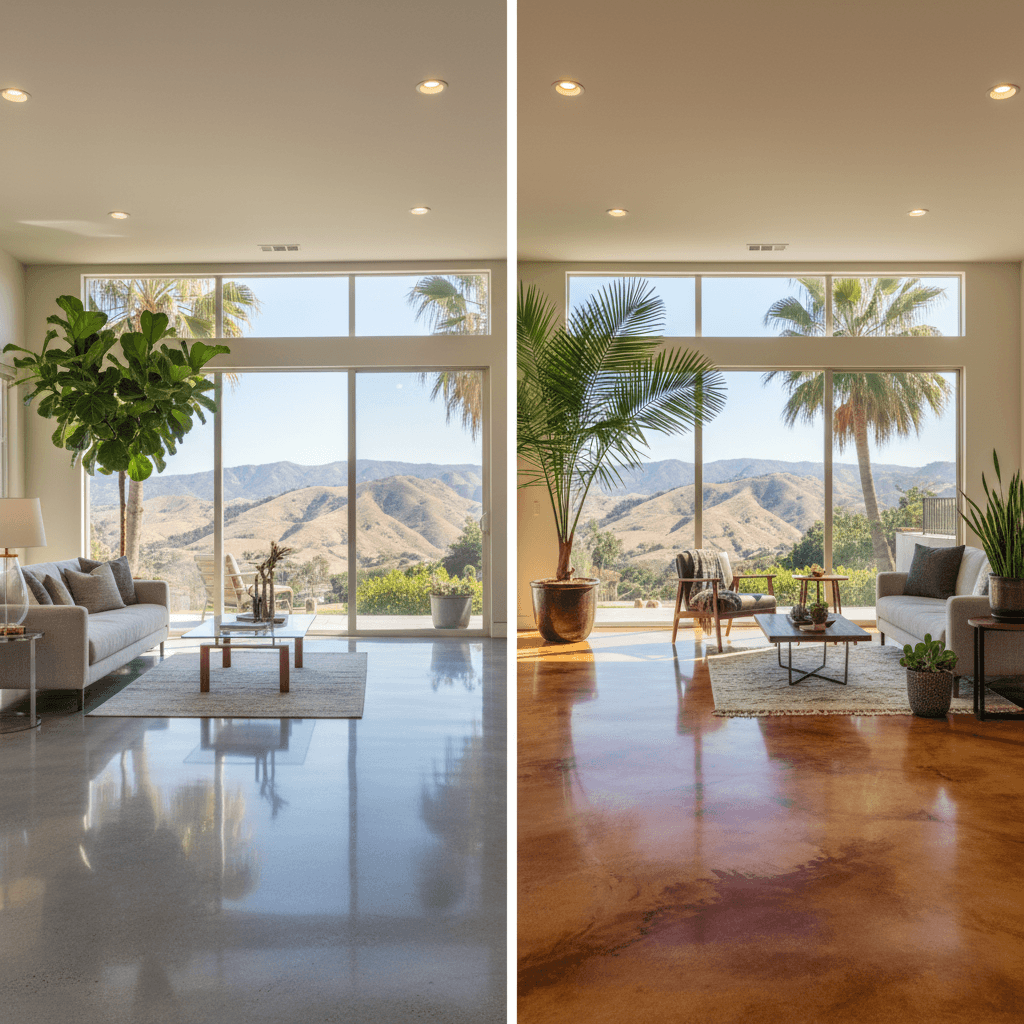
You can achieve virtually any color you want when using concrete. Not only can you choose from thousands of standard colors, but you can also create custom colors by mixing small amounts of various pigments. Additionally, you can stamp concrete to give it the appearance of brick, flagstone, or even wood. Finally, because concrete is a monolithic piece of material, it provides a smooth, uniform appearance. New methods of working with concrete now allow for highly customized designs.
Pavers
Like concrete, there are numerous colors available for pavers. While you cannot replicate the same design or pattern as you would with concrete, you can create intricate designs and patterns by combining different colors and shapes of pavers. Pavers are also available in a wide variety of textures and can add visual interest to a project. One of the main benefits of pavers is that they can be laid out in a variety of configurations, giving homeowners a lot of flexibility in terms of designing their hardscape. For example, you can create borders, accent walls, and even different patterns within the same project.
Tip: When considering what type of hardscape material to use for your home’s exterior, consider the architectural style of your home and the surrounding landscape.
Installation Time and Method
Concrete
Generally speaking, installing concrete is faster than installing pavers. While the installation-process for both materials is similar, concrete is typically installed as a single unit, rather than as individual stones. This allows contractors to complete large areas of concrete in one pour. Once the concrete cures, it can be driven on immediately, although it may take several days for it to fully harden.
Pavers
While pavers can be installed quickly, they are generally slower to install than concrete. Because each paver must be individually cut and placed, contractors typically install pavers in sections, rather than as one large unit. However, once the pavers are installed, homeowners can drive on them immediately, rather than waiting several days for them to cure. Pavers also lend themselves to phased installations, allowing homeowners to expand their hardscape over time.
Tip: When planning your hardscape project, factor in the amount of time you have to devote to having your outdoor space under construction.
Environmentally Friendly
Concrete
One of the advantages of concrete is that it can be poured with permeable options, such as pervious concrete, which allows rainwater to drain through the material. Additionally, light-colored materials reflect solar-radiation, helping to mitigate the urban heat island effect. Many concrete products contain recycled materials, further enhancing the environmental sustainability of the material.
Pavers
Unlike concrete, pavers provide a pathway for rainwater to penetrate into the ground beneath them, which helps to recharge groundwater supplies. Many pavers are made from recycled materials, which can include glass, ceramic tile, and plastic. Another environmentally friendly aspect of pavers is that they can be reused or recycled if removed. Like concrete, pavers can also be made from environmentally friendly materials. Discuss specific environmental issues you may have with your contractor to see if there are ways to incorporate green features into your project.
Return on Investment and Resale Value
Concrete
A clean, modern look that appeals to many buyers, a concrete driveway can increase the resale-value of a home. Stamped concrete can mimic the appearance of high-end materials such as brick or flagstone, providing a luxurious look at a fraction of the cost.
Pavers
Many homeowners perceive pavers as a premium option for their homes, and thus, they can provide a significant return on investment and increase the resale-value of a home. Since pavers are available in a wide variety of colors, patterns, and designs, there is something for everyone.
Research: Research local Orange County trends in real estate to determine what buyers currently prefer.
Which Material Is Best for Orange County Homes?
Concrete Is Best for
- Large driveway areas
- Modern, minimalist designs
- Pool-decks (with proper non-slip coatings)
- Spaces where a solid surface is preferred
Pavers Are Best for
- Traditional or rustic home designs
- Spaces that may experience slight ground-shifting
- Future modifications to the hardscape
- Designing intricate designs or patterns
Orange County Climate Conditions
In Orange County’s Mediterranean climate:
- Both concrete and pavers perform well
- Lighter color options for both materials can help to decrease heat-absorption
- Salt-resistant options may be desirable for coastal residents
How to Make Your Final Decision
To decide whether you prefer concrete or pavers, consider the following factors:
- Your budget (short-term and long-term)
- The style of your home and neighborhood
- The intended purpose of the hardscape area (e.g., driveway, patio, pool deck, etc.)
- Your ability to perform maintenance-tasks
- Any possible changes or additions you may wish to make in the future
- Any applicable Homeowners Association (HOA) rules or regulations
At Orange Concrete Contractor Pros, we specialize in concrete solutions; however, we recognize that pavers may be the best solution for certain jobs. Please contact us to discuss your unique requirements and let us assist you in determining which option is best for your hardscaping needs.
Regardless of whether you decide on concrete or pavers, the quality of the installation is essential to extending the life and aesthetic of your hardscape. If you choose to go with concrete, our experienced staff is prepared to design and build a functional and aesthetically pleasing surface for your Orange County property.
Do you have additional questions regarding the differences between concrete and pavers? Contact Orange Concrete Contractor Pros today to schedule a meeting and learn more about which hardscaping option is best suited for your Orange County home.
LATEST POSTS